
What My 15 Cats Taught Me About Multi-Cat Conflict - And How to Actually Start Fixing It
We live with 15 cats.
Yes, 15!
And before anyone says it - yes, it’s probably too many cats. Even with a large space, a catio, enrichment, and all the “right” things in place, things can still… unravel.
Recently, that’s exactly what started happening in our house.
We started noticing:
increased house soiling
more tension and chasing
two of our oldest cats (Pam and Beverly) getting harassed constantly
one cat (Elvi) stealing their food
and an overall sense that things were escalating
It didn’t feel random - but it also didn’t feel clear.
And honestly? It felt overwhelming. Even as a behaviorist, I couldn’t immediately “see” what was happening in my own home. Which, in hindsight, makes perfect sense - there’s a reason doctors aren’t supposed to treat themselves.
So I did what I often recommend to clients: I stepped back and mapped the relationships!
Step 1: The Relationship Matrix
I created a simple matrix and tracked how each cat related to the others:
++ bonded
+ friendly
0 neutral
-tension
-- conflict
This alone was helpful—but the real shift came next.
Step 2: The Sociogram (Where Everything Clicked)
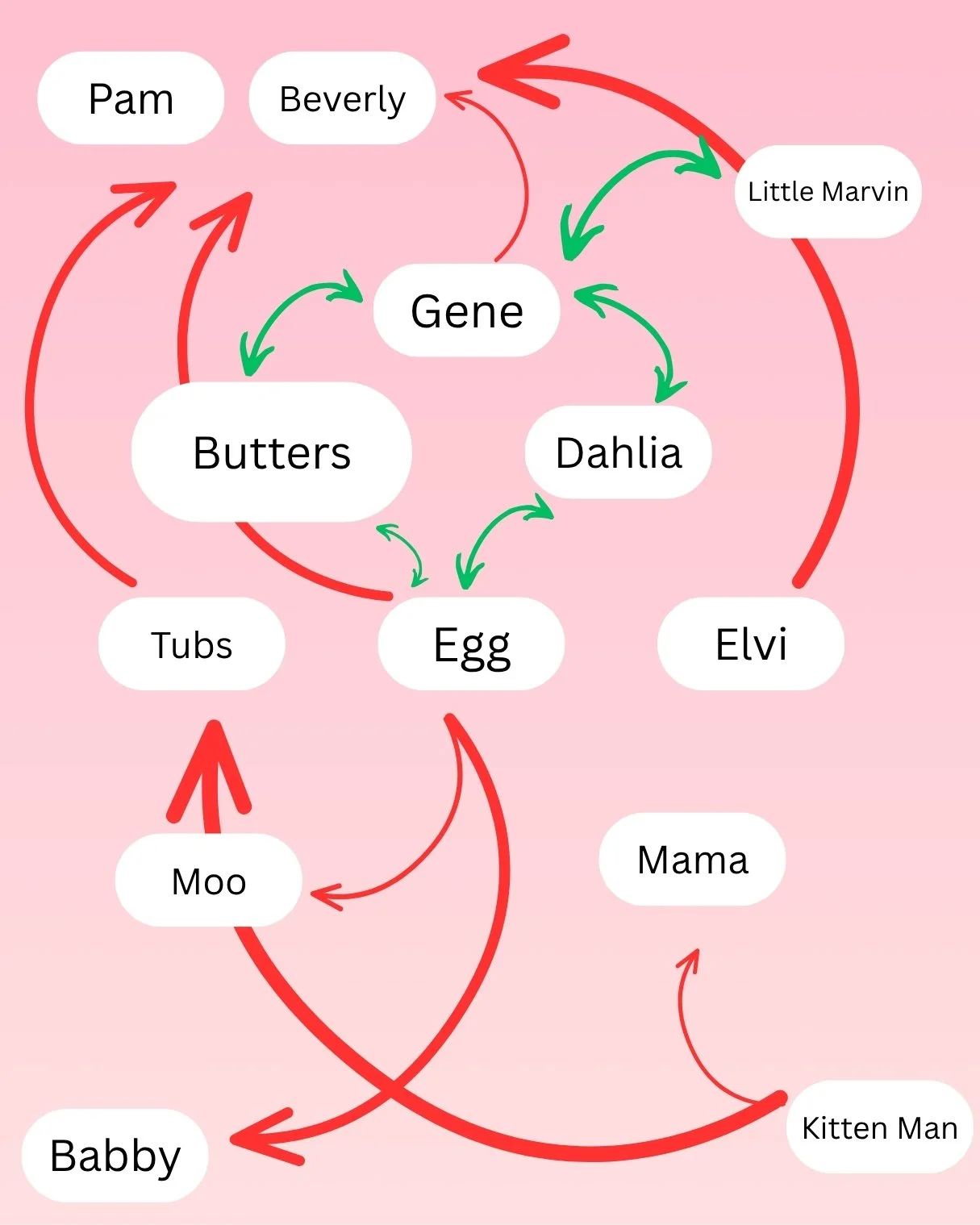
I turned the matrix into a visual map—a sociogram.
And immediately, a pattern jumped out. Pam and Beverly weren’t just having “issues.” They were being targeted by multiple cats. Not one bully. Not random conflict.
A system.
Pam and Beverly are our oldest cats (around 15), and since our former “head cat” Steve passed away three years ago, they’ve largely confined themselves to our bedroom and office.
They’re:
predictable
less mobile
less likely to push back
Which, unfortunately, made them the perfect outlet for tension in the group.
It wasn’t just one cat:
Gene (who can go from neutral to chaotic in a heartbeat)
Tubs (who has been on steroids and developed what I can only describe as “roid rage”)
Egg (our youngest, modeling what she sees)
Elvi (food-motivated and opportunistic)
Multiple moderate contributors = cumulative pressure
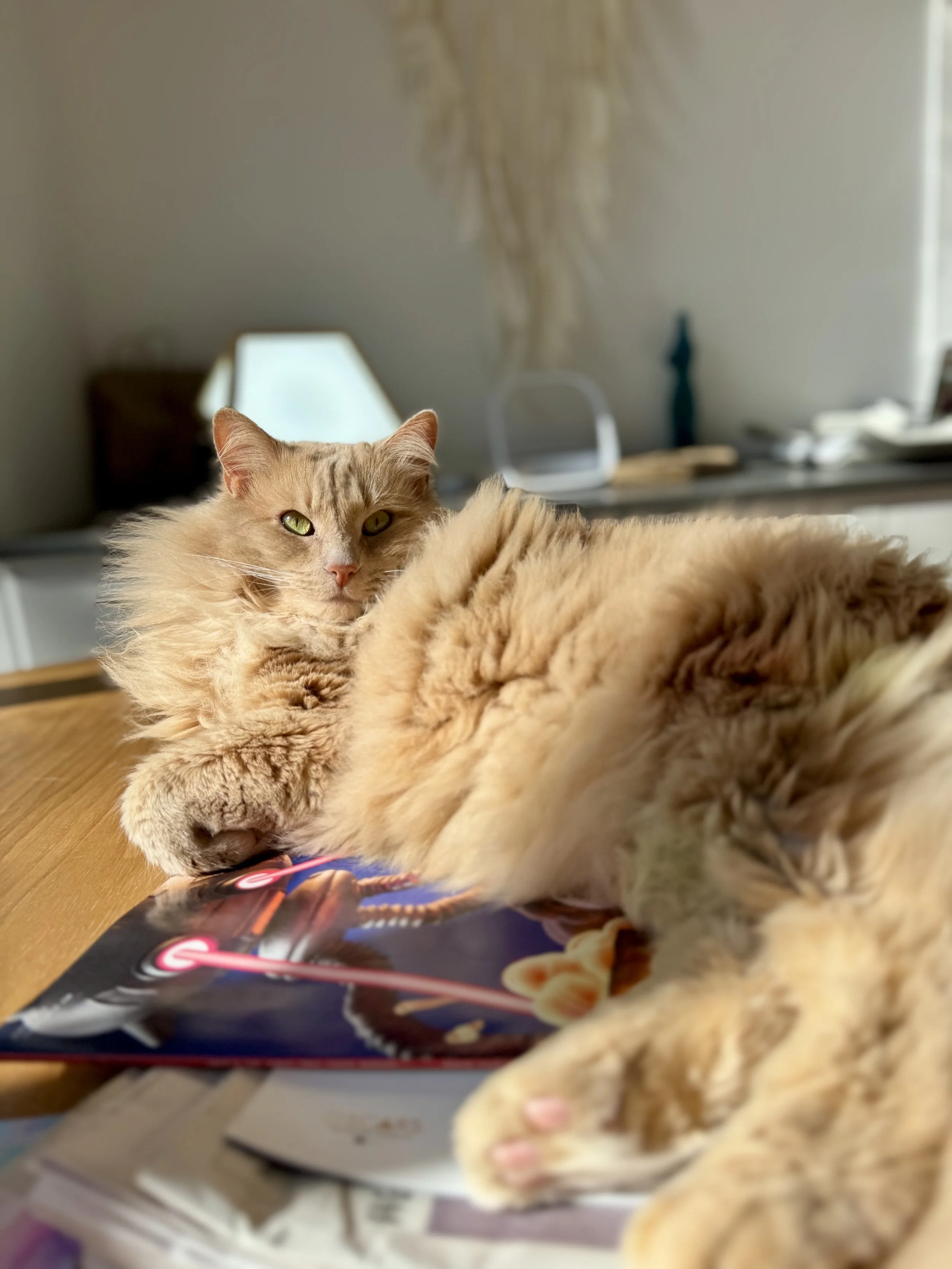
Butters is so handsome!
Then there’s Butters.
Butters showed up on our deck a few months after Steve died, and in many ways, he’s taken on that same role.
He:
grooms everyone
bunts everyone (spreading the house smell and love)
moves through the house calmly
reduces tension without effort
Seeing him show up as the most socially connected, non-aggressive cat in the map was… deeply validating. He really is that special.
The Outlier: Kitten Man
Kitten Man has struggled since Steve died. Steve was his “person” - his dad figure, his best friend.
Since then, he’s had:
aggression (especially with Kevin)
territorial marking
chronic stress
He wasn’t part of the same pattern as the others. He was on a completely different track. We have been trying to manage his stress and depression with increased intellectual and environmental stimulation, medication (fluoxetine and then effexor), but nothing has really helped.
The Moment That Changed Everything
One night, I heard raccoons fighting on our deck.
And I watched many of our cats have a fear/panic response to the sounds and race out of the room.
That’s when it clicked:
👉 this wasn’t just internal dynamics
👉 it was environmental pressure + social structure
Those raccoon conflicts were likely increasing baseline arousal and triggering redirected aggression inside the house.
This wasn’t: “My cats don’t get along.”
It was:
👉 pressure moving through a system
👉 landing on the lowest-risk individuals
And once you see that, the question changes from:
“Who’s the problem?”
to:
👉 “Where is the pressure going?”
Instead of trying to “fix relationships,” we’re changing the system!
Protecting Pam & Beverly
installing a microchip-controlled door so they can move freely but others can’t access them
adding a litter box so they don’t have to leave their safe space
reducing unwanted interactions
Reducing Pressure
significantly increasing structured play for Gene, Tubs, and Egg
interrupting patterns earlier
lowering overall arousal
We’re also tapering Tubs off prednisolone now that his feet have improved (he was on it for pododermatitis) - and his behavior is already shifting.
Managing Elvi
using a collar to prevent food stealing
maintaining microchip feeders
removing opportunities for reinforcement
Supporting Kitten Man
short-term decompression in his own room
daily harness walks
more one-on-one time
tapering off Effexor (which may have been contributing to discomfort as some cats can retain urine on this medication)
He’s already started reintegrating - and even letting Butters groom him again!
Environmental Changes
working to discourage raccoons from congregating near the house
reducing external stress triggers
If you live with multiple cats and things feel chaotic, unpredictable, or just… off:
👉 it’s probably not random
👉 and it’s probably not about one “problem cat”
It’s a system. And when you can see the system, you can start to change it.
Want to try this with your own cats?
I’ve put together a simple tool to help you get started with building a relationship matrix and sociogram!
Relationship Matrix Template
This will help you start seeing patterns in your own home. And if you map things out and aren’t sure what you’re seeing, that’s exactly what I help clients with 💛. For households where cats are no longer getting along, the Cat Relationship Reset gives you a step-by-step plan and support over several sessions.
Need help with your cat’s behavior?
I work with cat guardians worldwide on issues like:
• inter-cat aggression • house soiling • feline anxiety and so much more!