
How to Play With Your Cat Properly (And Why It Prevents Behavior Problems)
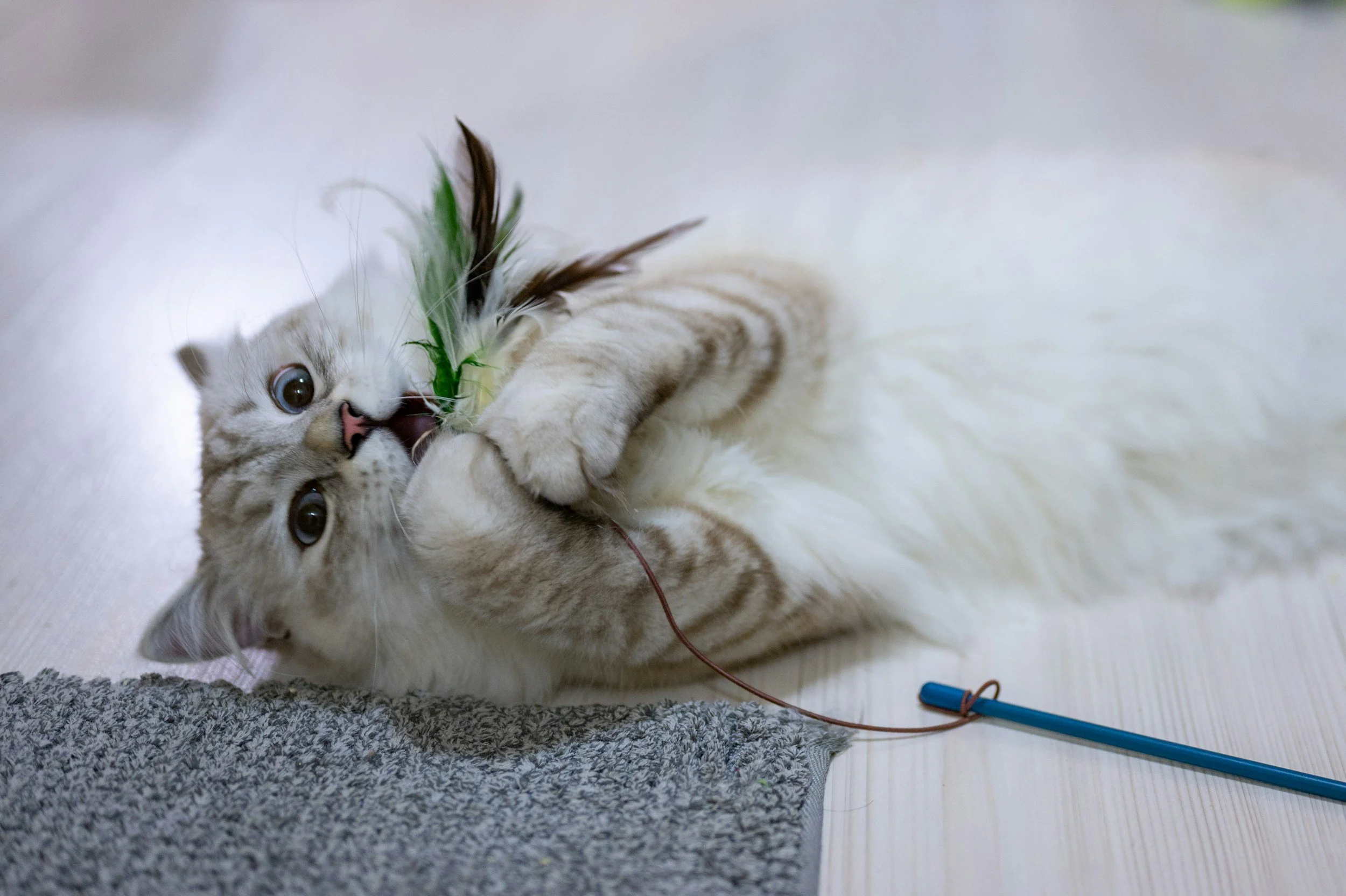
Play is one of the most important — and most overlooked — aspects of keeping cats behaviorally and physically healthy. In the wild, cats spend 10 to 12 hours a day hunting. Play, in our homes, is simulated hunting! It’s not just entertainment - it’s a biological necessity. And beyond that, play is one of the most powerful ways to build your relationship with your cat.
The benefits are un-ending. Aside from providing your cat with much needed cardiovascular exercise and intellectual stimulation, play is also a real bonding activity between you and your cat. You don’t want to be seen as just a meat sack who dispenses food — you also want to be FUN and engaging and a great friend and playmate for your cat.
Play also helps keep your cat lean and at lower risk for health problems as they age. Just as importantly, it helps mitigate stress-induced behavioral issues such as aggression, house soiling, inappropriate scratching, etc. Play gives your feline an appropriate outlet for their natural instincts. Without it, those instincts don’t disappear — they get redirected.
So how much should we play with our cat besties? I know we would all LOVE to do nothing but play with our cats 24/7, but realistically we have to work and eat and sleep. I always recommend at least 1–2 sessions of 15–20 minutes daily, ideally in the morning and at night. Make sure this play is regular and predictable - two things that cats LOVE (honestly, they love a schedule). Cats are crepuscular — meaning they are most active during dawn and dusk — so matching those times for play, if possible, is ideal.
If you have a young cat who is annoying you with tons of energy — especially when you are trying to sleep — make sure to play with them to exhaustion. And by exhaustion, I mean until they sit down because they are so tired. That said, always watch for panting or open mouth breathing. If that happens, pause the session until your cat has fully recovered. Play sessions that are too long can lead to over-exertion, especially in cats who are out of shape or older. But sessions that are too short — or that don’t allow your cat to actually catch something — can be even more problematic.
Remember, play is hunting practice! If you use something like a laser pointer, but never allow your cat to physically grab and capture something at the end, it can be frustrating and leave them more wound up than before. Always finish play with something physical your cat can catch.
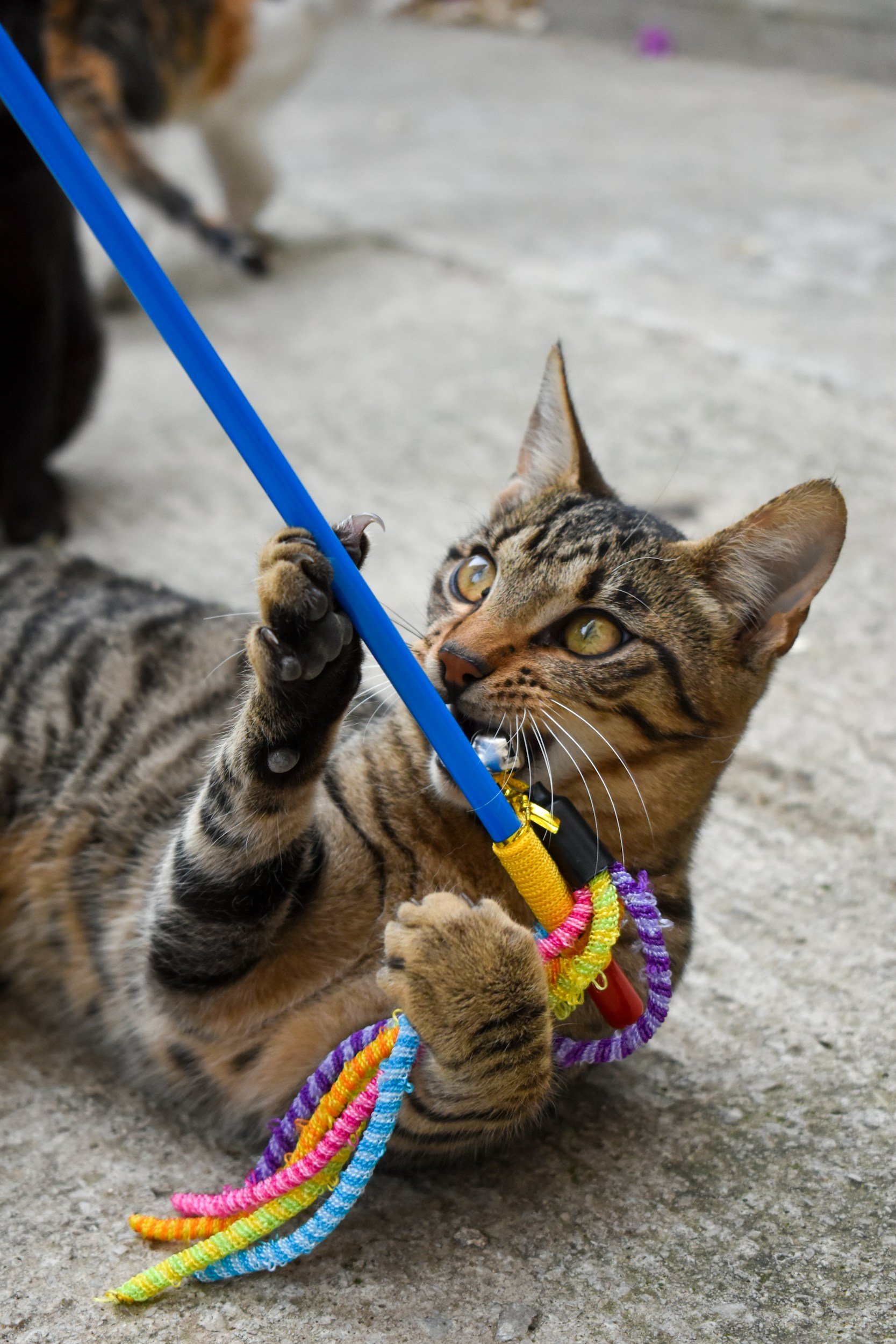
Age and personality largely determine the amount of play your cat needs. Young cats and kittens need TONS of play. They will also need play opportunities without you — enrichment boxes, food puzzles, motion-activated toys, and cat TV can all help meet that need. Click here to read more about intellectual stimulation for your feline friend!
Older cats, especially arthritic cats, will need less high-intensity play. They may need accommodations, such as toys they can engage with while lying down (I love baby play mats for older or differently abled cats), or play sessions that don’t involve as much running. If needed, consult with your vet or a behavior professional who can help you come up with a play plan tailored to your cat.
But what SHOULDN’T you do? The biggest rule: DON’T PLAY WITH YOUR HANDS. It’s tempting, but you should never encourage your cat to see your hands — or any part of your body — as toys. Doing so can lead to accidental bites or scratches that require medical attention, and it can also condition your cat to treat visitors the same way. Always use toys!!!
Don’t tease your cat. Always finish a play session with your cat successfully “killing” the toy. If medically appropriate, giving your cat a small treat at the end of play can simulate the full hunting sequence: stare, stalk, chase, pounce, capture, kill, eat. Completing this cycle helps regulate their nervous system and leaves them satisfied. Incomplete hunting cycles contribute to frustration and stress - the very thing we are trying to alleviate here.
Play doesn’t have to look the same every day. And it shouldn’t! Cats crave novelty and will often become bored with the same thing after a day or two. So have fun with your cat! Invent new games. Try hide and seek. Build forts out of cardboard boxes or blankets. Rotate toys so they stay novel and interesting. The possibilities really are endless.
Play is one of the most powerful tools we have for strengthening the bond we have with our cats, improving their quality of life AND preventing stress and behavior issues. It’s stress regulation (think about how much better you feel after a workout!), communication AND prevention, and most of all it’s FUN! Check out the links below for some toys that our cats love for cat / human play, and get going! :)
The Cat Dancer (the gold standard)
Rainbow Wand Toy (another constant crowd pleaser)
Feather + Squiggly Wand Toy (noisy but very effective)
Need help with your cat’s behavior?
I work with cat guardians worldwide on issues like:
• inter-cat aggression • house soiling • feline anxiety and so much more!