
Do I Need a Cat Behaviorist?

If you've found yourself searching "Do I need a cat behaviorist?", there's a good chance you're feeling frustrated, overwhelmed, or maybe even a little embarrassed about what's going on with your cat. I get it! More than 20 years ago, long before I became a cat behavior consultant myself (I was still a photographer), I reached a breaking point with inter-cat aggression in my home and hired a behaviorist out of desperation. I didn't know what to expect and felt weird and almost embarrassed – as though I was a failure but also as if I was doing something super strange and weird, inviting this person into my home to do therapy with my cats.
As it turns out, neither of those things was true.
Cat behavior consulting isn't pet psychology, pet psychics, or anything "woo-woo." It is a science-based profession rooted in animal behavior, learning theory, environmental management, welfare, and the latest research. A good behavior consultant should have formal education (think graduate school) in animal behavior and psychology, professional certifications (from places like IAABC or ABS), and a commitment to continuing education.
When I work with clients, I'm not simply looking at the behavior itself. I'm looking at the whole picture: your cat's medical history, daily routine, environment, family dynamics, and the specific circumstances surrounding the problem. The goal isn't just to stop an unwanted behavior. The goal is to understand why it's happening and create a plan that addresses the root cause.
And yes, sometimes the humans need just as much training as the cats. 🙂
What Does a Cat Behaviorist Actually Do?
One of the biggest misconceptions I encounter is that behavior consultants somehow "talk" to animals or interpret their emotions in mystical ways. In reality, our work is rooted in science. We use what we know about animal behavior, learning, motivation, stress, welfare, and environmental influences to understand why a behavior is occurring and how we can change the circumstances that are driving it.
A behavior consultation typically involves a thorough review of your cat's history, discussion of the issue you're experiencing, recommendations for environmental and behavioral changes, enrichment ideas, product suggestions, and a detailed plan moving forward. I also like to provide clients with relevant research and resources so they understand not only what I'm recommending, but why.
How Is a Cat Behaviorist Different From a Veterinarian?

This is an important distinction. A cat behaviorist is not a veterinarian (unless you're seeing a veterinary behaviorist, who is both a veterinarian and also boarded in behavior). Veterinarians specialize in medicine, while behavior professionals specialize in behavior and welfare. The truth is that the best outcomes often happen when veterinarians and behavior professionals work together.
Many behavior concerns can have underlying medical causes. House soiling, for example, can be associated with urinary tract disease, arthritis, gastrointestinal disease, pain, or other medical issues. Aggression can sometimes be driven by discomfort, dental pain, or chronic pain conditions.
That's why I almost always recommend starting with your veterinarian when a new behavior problem appears. One of my favorite parts of this work is collaborating with veterinarians to get to the root of what's happening so we can help the cat as quickly as possible.
When Should You Consider Hiring a Cat Behaviorist?
My general rule of thumb is simple: if the problem is new, getting worse, affecting your cat's quality of life, or affecting your quality of life, it's worth seeking help.
Maybe your cat has suddenly started urinating outside the litter box. Maybe two cats who have lived together peacefully for years are suddenly fighting. Maybe your cat spends most of the day hiding under the bed and seems unable to relax around visitors. Maybe your cat has become destructive, hypervigilant, or unusually vocal.
These are all signs that something may be wrong!
That doesn't automatically mean the problem is behavioral. In fact, many of these changes can be caused by underlying medical issues. But whether the cause is medical, behavioral, or a combination of both, significant changes in behavior deserve attention.
One thing I particularly want to mention is male cats and litter box issues. If you have a male cat who is repeatedly entering and exiting the litter box, vocalizing, or struggling to urinate, please seek veterinary care immediately. Urinary blockages can become life-threatening very quickly.
The Most Common Reasons People Contact Me
The two issues I see most frequently are inter-cat aggression and house soiling. Beyond that, I often work with families who are introducing a new pet or baby, preparing for a move, struggling with scratching issues, dealing with aggression toward people, or navigating challenges sometimes referred to as "single kitten syndrome."
What's interesting is that many of these clients contact me only after trying to solve the problem on their own for months - or sometimes years. By the time they reach out, they're often exhausted, frustrated, and worried that nothing can be done. But fortunately, that's usually not the case.
Please Don't Wait Too Long

If there is one category of problem where people consistently wait too long to seek help, it's toileting issues. Many cases of inappropriate elimination have a medical component, particularly when a cat is defecating outside the litter box. Urination outside the litter box can also be associated with medical conditions and should always be investigated thoroughly.
Even when the issue is ultimately behavioral, waiting too long can make the problem harder to resolve. The longer a behavior continues, the more established it often becomes. The best time to address a problem behavior is usually shortly after it begins - not years later.
I once had a client contact me about a 16-year-old cat who had been urinating on the same couch for her entire life. At that point, the cat had spent a lifetime practicing that behavior, and the client was unwilling to remove the heavily soiled couch that had become part of the cycle.
As you can imagine, that was a much more difficult situation than it would have been if the issue had been addressed when it first started.
What About Cats That Are Fighting?
This is one of the most common reasons people reach out to me, and the answer depends on the severity of the conflict. If one cat has just returned from the veterinarian smelling different than usual, a few days of tension may not be cause for alarm. If outdoor cats are triggering redirected aggression, addressing the outside trigger may help resolve the problem.
But if your cats are physically fighting, injuring one another, bullying each other away from resources, or developing litter box issues because of the conflict, I strongly encourage seeking help before the situation escalates further.
Some of the most rewarding cases I've worked on have involved cats whose owners had nearly given up hope. In many situations, a combination of separation, careful reintroduction, environmental adjustments, increased enrichment, and sometimes medication can dramatically improve relationships between cats.
What Happens During a Behavior Consultation?
Every consultant works a little differently, but my goal is always the same: to understand what's driving the behavior and create a realistic plan that works for both you and your cat. That process usually includes reviewing your cat's history, discussing the problem in detail, identifying contributing factors, making recommendations for environmental and behavioral changes, and providing practical next steps.
I also spend a lot of time helping clients understand their cat's needs. Most behavior problems aren't the result of a "bad" cat. They're often the result of boredom, stress, unmet needs, environmental challenges, or simple misunderstandings between cats and their humans.
Does Hiring a Behaviorist Mean I've Failed My Cat?
Absolutely not. In fact, I would argue the opposite! You can only fail your cat if you give up!
If you get sick and go to the doctor, have you failed your body? Of course not. Asking for help is a sign that you're invested in your cat's wellbeing and willing to do what it takes to improve their quality of life.
I think many people delay seeking help because hiring a cat behaviorist still feels unusual. Nobody thinks twice about hiring a trainer for a dog, but for some reason people often feel awkward about seeking professional help for a cat.
Hopefully that's changing.
Cats deserve support too!
Can Virtual Consultations Really Work?
Yes - and in my experience, they work better than in-home visits.
Most cats are not going to demonstrate their problem behavior in front of a stranger. Some won't even come out from under the bed!
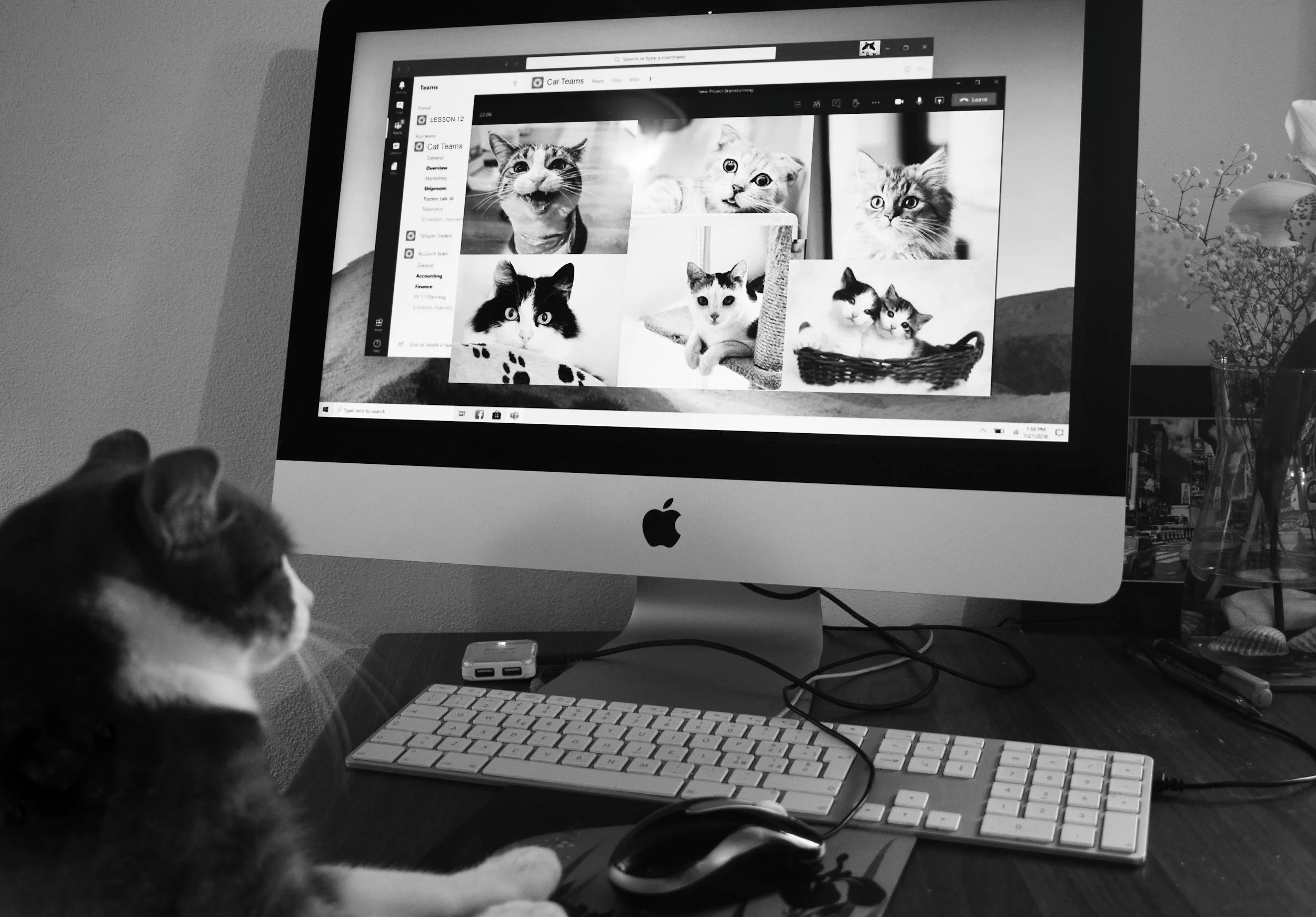
With virtual consultations, clients can send videos from their phones or home cameras showing the behavior exactly as it occurs in real life. They can share photos of litter box setups, feeding stations, resting areas, and other parts of the home that may be relevant to the issue. That often provides more useful information than I could gather during a single home visit.
The reality is that the consultation is usually more about the humans than the feline. My job is to help you (the human) understand what's happening with your cat and give you (the human) the tools to make meaningful changes.
What Happens If You Ignore a Serious Behavior Problem?
In most cases, behavior problems don't simply disappear because time passes. More often, they become more established. Relationships between cats can deteriorate. Stress levels increase. Unwanted habits become routine. What might have been a relatively straightforward problem early on can become much more complicated months or years later.
The best time to address a behavior problem is when it first appears. The second-best time is today.
If you're wondering whether you need a cat behaviorist, you probably don't need to spend a lot of time worrying about whether your problem is "serious enough."
If your cat's behavior is affecting their welfare, your household, or your relationship with them, it's worth reaching out for help.
You don't have to wait until you're at your breaking point.
And you certainly don't have to figure it out alone. I’m here to help!
Ready to Get Help?
Living with a behavior problem can be stressful for everyone involved—including your cat.
The good news is that many behavior issues can improve significantly when we understand what's driving them and put the right plan in place.
If you're feeling overwhelmed, frustrated, or simply unsure what to do next, I'd love to help.
Through virtual consultations, I work with cat owners around the world to address issues such as inter-cat aggression, litter box problems, introductions, anxiety, fear, scratching concerns, and more.
You don't have to wait until you're at your breaking point.