
How to stop my cat from eating plants!
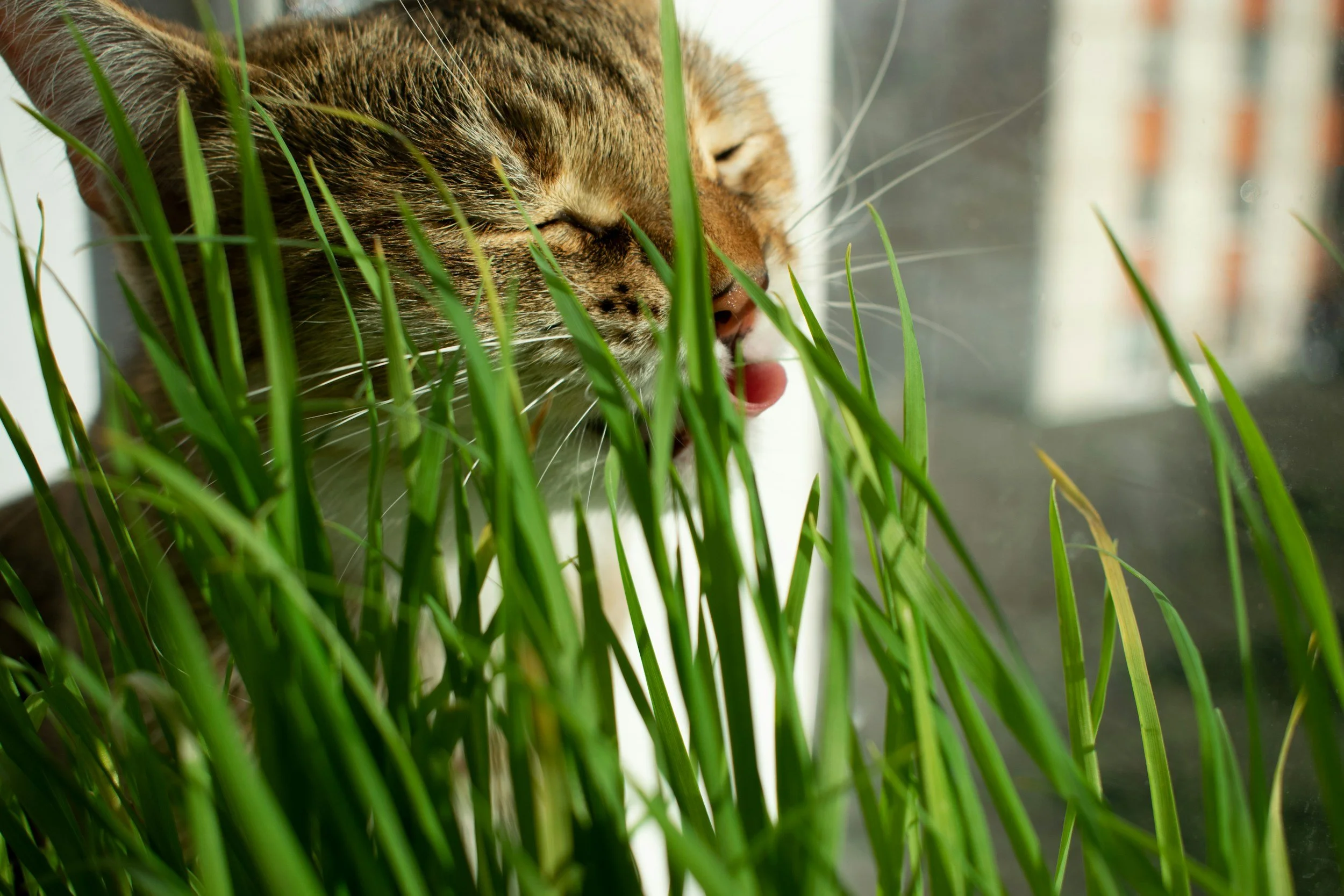
House plants bring life, color, and freshness to our homes, but for those of us living with cats, they can also cause worry and stress! For some reason, many (but not ALL) cats LOVE to chomp on greenery and flowers - some just biting and others actually ingesting what we grow.. Because of this, the relationship between cats and plants is a complex one, as many common houseplants can be toxic to our feline friends.
Why are cats drawn to this kind of snackery? Understanding why cats chew on plants is crucial to addressing this behavior. While some cats seek out plants for digestive benefits (like helping with hairballs), most plant-chewing behavior stems from boredom. Rather than using deterrents like sprays or orange peels (punishment or “negative” reinforcement solutions are never recommended here), I suggest addressing the root cause by providing more enrichment and play time. You can also grow cat grass specifically for your cat’s consumption (we always have some growing for our 15 cats), relocate valuable plants to inaccessible areas, and significantly increase interactive playtime (at least 20 min a day, ideally in the AM and PM). If your cat chews on plants, but also other inappropriate items (the wall, furniture, rugs, etc) - please prioritize a visit with your veterinarian to rule out PICA or a dental issue!
Among the most concerning toxic plants for cats are popular houseplants like Monsteras, Dieffenbachia, and Pothos. These plants contain calcium oxalate crystals, which can be described as “little swords or knives" in the leaves that can cause irritation if ingested. While not immediately lethal like lilies (which cause rapid organ failure and should NEVER be in a home with felines), these plants can still cause significant discomfort including burning sensations in the mouth, esophagus, and digestive tract. If you suspect your cat has consumed any part of these plants, it's important to contact your veterinarian right away rather than waiting for visible symptoms.
If you love cats and still want to enjoy indoor greenery, there are many pet-safe alternatives! Hoya plants, Peperomia varieties, Orchids, most Ferns, and Calathea are all excellent choices for creating a cat-friendly environment. Palm trees (except for the highly toxic Sago Palm) and many succulents are also safe options. If you're looking to grow herbs, options like basil, parsley, thyme, sage, and cilantro are generally cat-safe, though they should be monitored if your cat seems particularly interested in consuming them. And never forget about growing catnip for your cat’s own enjoyment. :)
Check out the full list of toxic and non toxic plants for cats by the ASPCA here!
One of my first cats LOVED to dig in plant pots and use them as a litter box - we nicknamed her PeePot. For cat owners dealing with similar issues - felines who dig in plant pots or use them as litter boxes - you can use large pond rocks (about 3 inches in diameter) to cover the soil. I also suggest checking to see if there might be underlying issues with your cat's actual litter box - such as cleanliness, privacy concerns, bullying or uncomfortable substrate. Sometimes cats choose plant pots because dirt is softer than certain types of litter, particularly pellet varieties. Previously outdoor only or community / stray / feral cats will often ONLY eliminate in dirt first before getting used to litter.
If you’re interested in learning more about cats and plants, check out the podcast episode I did with plant expert Anastasia below!